Layering Acrylic Paint for Beginners: The Secret to Depth & Dimension
Layering acrylic paint for beginners is the secret to depth and dimension. If you’ve ever looked at your acrylic paintings and felt they looked flat, streaky, or just not quite “finished,” you’re not alone. Get out your popcorn and roll the video.
One of the most common challenges beginners face is trying to get everything perfect in one pass. Acrylic paint dries fast, (which is what I love about it), and instead of fighting it, we can use that quick drying time to our advantage through a simple but powerful technique: layering.
In this beginner-friendly acrylic art lesson, I’m sharing how layering your acrylic paint helps you build depth slowly and naturally — no stress, no scrubbing, and no muddy color. Layering acrylic paint is one of the easiest ways to improve your paintings, whether you’re creating landscapes, flowers, water, or still life pieces.
Why Layering Acrylic Paint Works
Acrylics dry quickly, which means you can apply one layer, let it set, and then build another right on top. This gradual build-up creates a sense of depth that’s hard to achieve with a single thick coat of paint. When you layer, you’re not only adjusting color — you’re adjusting value, which is what truly shapes your painting and gives it dimension.
If you’ve read my recent blog post w/video on values, you know that value does the heavy lifting. Think of layering and value as best friends working together to make your painting stronger. Click HERE if you missed it.
Start with The Underpainting
Your first layer should be soft and light. Think of it as gently telling your canvas where everything will go. You don’t need to be perfect here — just establish the general idea of your sky, land, water, or subject. This is the underpainting and all the magic starts of top of it.
Use light pressure and avoid scrubbing. Let the paint dry completely before you move to the next step. This keeps your colors clean and reduces streaks. It won’t take more than 15 minutes.
Where is Your Light Source?
I put an arrow on whatever support I’m painting on that shows me where the light is pointing. This helps me remember which side of an object should be lighter. You’d be surprised at how many times I’ve screwed that up – or maybe you wouldn’t.
Build the Middle Layers
Once the base layer is dry, you can start adding more definition. (Remembering where your light is coming from.) This is where your forms begin to appear and the magic happens. Colors become richer, shapes get clearer, and you begin to create depth. Keep your pressure soft — too much pressure can lift the layers underneath. It’s a fixable problem, but takes time and effort.
Now For The Big Finish!
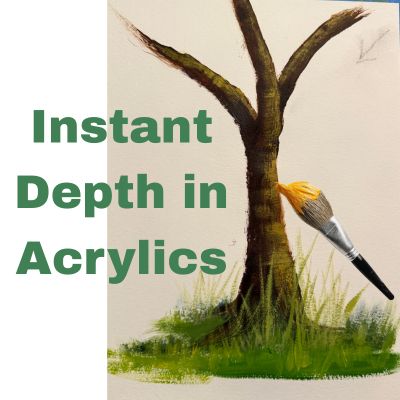
Your top layers are where everything comes to life. This might be a touch of light on a tree, a brighter stroke on a wave, or a clean edge on a rock. These small additions sit beautifully on top of your earlier layers and instantly add dimension. These minor touches are the crown jewel of your painting.
Common Mistakes to Avoid
Beginners often use too much water, scrub too hard, expect results with one stroke or to be perfect immediately. Remember: acrylic paint is a layer-friendly medium. Thin paint, light pressure, and patience between layers make all the difference.
Want to Learn More?
If you’d like weekly painting tips, inspiration, and a chance to discover new places to view art, join my newsletter Let’s Talk Art. I’d love to have you there. It’s a one page newsletter where you can go as deep as you want on it. (Don’t worry! I hate spam and I will NEVER sell or share your email.)
Let’s paint together soon.